

If you’re dealing with persistent pain—whether it’s in your heel, shoulder, elbow, or knee—you’ve likely come across two very different options: cortisone injections and Shockwave Therapy.
On the surface, they can sound similar. Both aim to reduce pain and are commonly used for conditions like tendonitis or plantar fasciitis. But when you look closer, they take completely different approaches—and lead to very different long-term outcomes. Keep reading, because it’s so important to understand not just how to feel better today, but how to stay better over time.
The Main Differences Between Cortisone Shots and Shockwave Therapy: Relief vs. Repair
The biggest distinction comes down to what each treatment can actually do inside your body.
- Cortisone injections suppress inflammation. They’re designed to quiet pain signals quickly, often within days. The results are temporary, though, typically lasting a few months. Something critical to keep in mind, though, is that repeated use may weaken tissue over time.
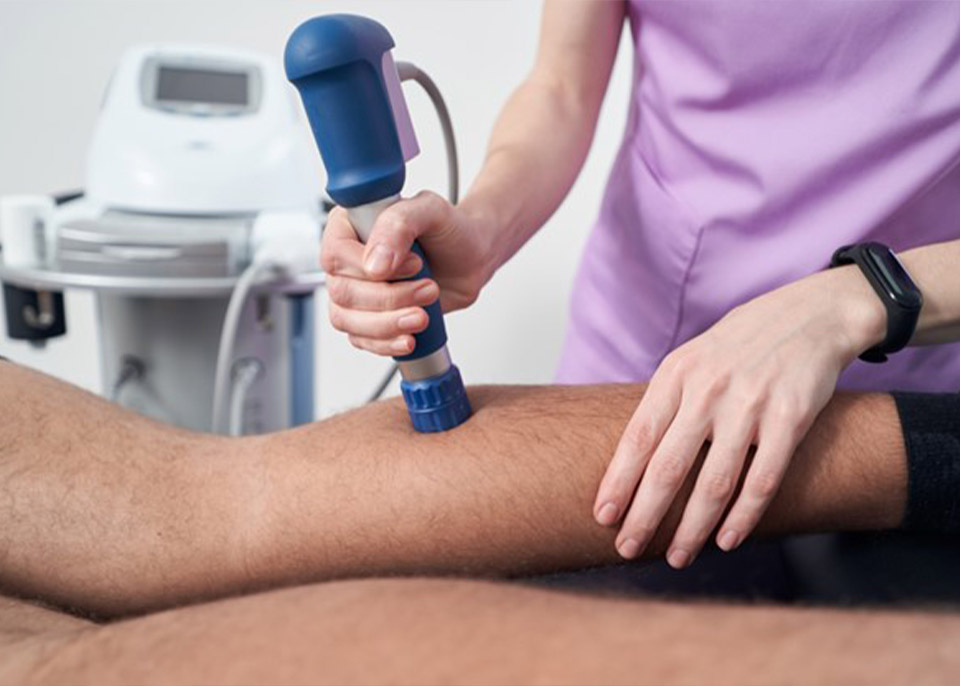
- Shockwave Therapy, on the other hand, stimulates healing using sound waves to increase blood flow, trigger cellular repair, and rebuild damaged tissue. Many patients notice gradual but long-lasting improvement, with relief often starting in a few weeks and lasting months to a year or more. Shockwave Therapy is also a very minimal risk procedure, with no injections or downtime.
In simple terms: one “turns the volume down,” while the other fixes the wiring.
When Short-Term Relief Isn’t Enough
Cortisone injections can be helpful in certain situations—especially when pain is severe enough to limit movement or sleep. But they don’t address why the pain developed in the first place. That’s where many patients get stuck in a cycle: Pain, Injection, Relief, Return of Pain, Repeat. Shockwave Therapy offers a different path, especially for chronic conditions that haven’t responded to rest, stretching, or other conservative care.
At Champion Wellness Center of Clearwater, we often recommend Shockwave Therapy for patients who want to move beyond temporary fixes and focus on long-term recovery. It’s especially effective for:
- Plantar fasciitis and heel pain.
- Tennis or golfer’s elbow.
- Achilles tendinopathy.
- Rotator cuff and shoulder issues.
Because it works by stimulating your body’s natural healing response, it helps rebuild tissue instead of simply masking discomfort.
What About SoftWave Therapy?
At our Clearwater location, we also offer SoftWave Therapy, an advanced form of shockwave technology that takes regenerative treatment a step further.
While traditional shockwave therapy is highly effective, SoftWave uses a broad-focused wave pattern that allows energy to reach a wider and deeper area of tissue—without concentrating discomfort in a single point. Here’s how that difference plays out for patients:
- Broader Treatment Area: Instead of targeting one precise spot, SoftWave distributes energy across a larger region—helpful when pain is more diffuse or involves multiple structures.
- Greater Depth of Penetration: The waves can reach deeper layers of tissue, addressing underlying issues that may not respond to more surface-level treatments.
- Enhanced Comfort: Because the energy isn’t as concentrated, most patients find SoftWave to be gentler and easier to tolerate.
- Cellular-Level Healing:SoftWave technology triggers a process called mechanotransduction, which signals your body to reduce inflammation and activate its own repair mechanisms—including dormant stem cells.
In short, if traditional Shockwave helps “wake up” healing, SoftWave expands and amplifies that response—making it a powerful option for patients looking for comprehensive, long-term recovery.
Long-Term Relief Starts With the Right Approach—Take the First Step Today
If you’re deciding between quick relief and long-term healing, ask yourself this: “Do I want this to go away for now, or for good?”
At Champion Wellness Center of Clearwater, we focus on treatments that support your body’s ability to heal—not just temporarily quiet symptoms. Whether that means Shockwave Therapy or the advanced capabilities of SoftWave Therapy, our goal is to help you move beyond short-term fixes and into lasting relief. Call us today at (727) 797-9900 to schedule your consultation and find out which approach is right for you—and start your path toward real, long-term recovery.